


VICTORIA’S automotive industry has slammed the state government’s decision to exclude automotive apprenticeships from its expanded Free TAFE program for 2027, warning the move could further disadvantage a sector already struggling to attract and retain skilled workers.
The Victorian Automotive Chamber of Commerce (VACC) says the decision overlooks nationally recognised skills shortages across the automotive repair and service industry, while providing additional financial incentives for young people entering other trades.
Announced this week under the Carroll Government’s 2027 Skills First program, the expansion will cover first-year tuition fees for six apprenticeships, including bricklaying, carpentry, electrical, plumbing, baking, and hairdressing.
Not one automotive trade is included.
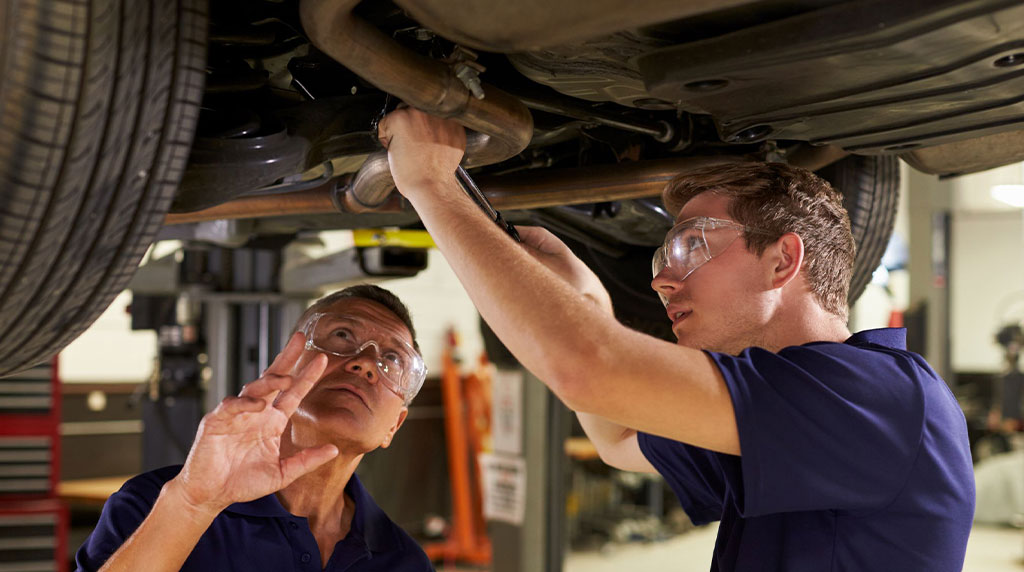
VACC chief executive officer Peter Jones said the omission was difficult to reconcile with persistent shortages of qualified motor mechanics, automotive electricians, diesel technicians, and other specialised tradespeople.
“We welcome investment in apprenticeships, but it is difficult to understand why automotive continues to miss out when our industry is facing such significant workforce shortages,” he said.
“Jobs and Skills Australia has consistently identified automotive technicians among occupations experiencing skills shortages. The evidence is clear, yet automotive apprentices are once again being left out of this additional support.”
The criticism follows mounting evidence that Australia’s automotive workforce shortage is affecting workshop productivity, increasing repair times and placing additional pressure on dealerships and independent repair businesses.
As reported by GoAutoNews Premium earlier this month, a Motor Trades Association of Australia (MTAA) industry survey found more than 90 per cent of automotive employers considered recruitment difficult or very difficult, while 75 per cent said finding qualified workers had become harder over the preceding three years.

VACC chief executive officer Peter Jones
The survey also found the average number of applicants per vacancy had fallen from 8.2 per cent in 2024 to just 3.0 per cent in 2026, while 38 per cent of advertised positions remained unfilled.
More than two-thirds of surveyed employers expected recruitment conditions to deteriorate further over the following 12 months.
The figures reinforce concerns raised by VACC last November, when Mr Jones warned that one in three automotive businesses was carrying technician vacancies that had remained unfilled for more than six months.
At the time, he called for greater recognition of automotive trades and improved incentives to attract young people into the industry.
The situation is particularly concerning given the automotive sector’s difficulties in replenishing its workforce.
As previously reported by this masthead, industry apprenticeship commencements declined by 25 per cent during 2024, prompting warnings that the shortage of qualified technicians would continue for several years.
More recent National Centre for Vocational Education Research figures show Australian trade apprenticeship commencements declined another 1.1 per cent in the 12 months to March 2026, with automotive and engineering trades among the categories contributing to the decline.
Although trade completions reached record levels in several occupations, including automotive and engineering trades, employers remain concerned that the number of new entrants will be insufficient to replace retiring technicians and meet growing demand.
The MTAA’s latest findings suggest almost four in 10 automotive and engineering trade apprenticeships are not completed within six years, while 43 per cent of employers believe existing training pathways are failing to produce suitably qualified workers.
The recruitment challenge extends beyond financial incentives.

Australian Automotive Aftermarket Association chief executive officer Stuart Charity
Speaking with GoAutoNews Premium earlier this year, Australian Automotive Aftermarket Association (AAAA) chief executive officer Stuart Charity said the sector was struggling to attract school leavers, partly because perceptions of automotive careers had failed to keep pace with technological change.
He suggested the industry needed to better communicate the opportunities available in modern automotive servicing, particularly as vehicles become increasingly dependent on electronics, software, and advanced diagnostics.
The traditional pathway into the trade, often established through a childhood interest in repairing and modifying vehicles, is also becoming less common.
Increasing vehicle complexity has made home maintenance more difficult, reducing the exposure many young people once had to the mechanical trades.
At the same time, the industry faces competition from construction and electrical trades, where apprenticeship incentives and established career pathways may be more visible to prospective recruits.
For automotive businesses, the challenge is compounded by the accelerating introduction of battery electric vehicles, plug-in hybrids, and increasingly sophisticated driver assistance systems.
Technicians must now possess skills extending well beyond conventional mechanical servicing, including high-voltage electrical safety, battery management, electronic fault diagnosis, software calibration, and the operation of advanced safety systems. Jobs and Skills Australia’s latest Occupation Shortage List identifies training constraints as the principal driver of the shortage of motor mechanics, despite an overall easing in national labour shortages.
Its 2026 assessment found that 27 per cent of occupations remained in shortage nationally, down from 29 per cent in 2025, with almost half of technician and trade occupations continuing to experience workforce shortages.
The figures lend weight to VACC’s argument that automotive training requires sustained attention, particularly as the technical demands of the profession continue to increase.
“The automotive industry is changing rapidly, and we need to be encouraging more young people into these careers, not making some trades more attractive than others through selective incentives,” added Mr Jones.
“We are asking the Victorian Government for a level playing field. Automotive businesses are ready to invest in the next generation of skilled workers, but they deserve the same support being offered to other industries.”
The Victorian Government says its 2027 training package is designed to address shortages in priority industries, with $1.0 billion allocated to the Skills First program to support approximately 130,000 Victorians undertaking Free TAFE and subsidised training.
Deputy Premier and Minister for Skills and Training Gabrielle Williams said removing first-year tuition fees would make apprenticeships more accessible while reducing costs for businesses taking on new workers.
The government says its Free TAFE program has already assisted 267,000 Victorians and saved students approximately $930 million in tuition fees.
Automotive training has not been excluded from existing government support arrangements.
 The Certificate III in Light Vehicle Mechanical Technology remains eligible for Skills First subsidies, while the Certificate II in Automotive Vocational Preparation is available through Free TAFE as a pathway into an automotive apprenticeship.
However, neither receives the additional first-year apprenticeship tuition support announced for the six selected trades in 2027.
The VACC argues the distinction risks making automotive apprenticeships comparatively less attractive to prospective students and employers, particularly when businesses are already confronting increasing employment and training expenses.
The organisation says it continues to support apprentices through its dedicated field managers, who provide mentoring and assistance throughout training to improve completion and retention outcomes.
The VACC describes itself as Australia’s largest single employer of automotive apprentices.
Mr Jones said the organisation was seeking equivalent government recognition for automotive trades rather than opposing additional investment in other industries.
“We welcome investment in apprenticeships, but incentives should be available across all trades facing critical skills shortages, not just a select few,” he reiterated.
“If the Government is serious about addressing Victoria’s skills crisis, it needs to take a fair and consistent approach that recognises the workforce needs of all industries, including automotive.”
By Matt Brogan








 Read More: Related articles


