


AUSTRALIA’S new-car retail industry contributed $21.5 billion to the economy in 2025, employed 64,000 people and provided an essential service of selling, servicing and maintaining a fleet of vehicles that provide crucial transport services, according to AADA research.
In its latest Dealernomics publication – which shows the contribution to the community and economy – the Australian Automotive Dealer Association (AADA) highlights the major contribution dealers continue to make to the Australian economy. “It is an essential service. Consumers and businesses must ensure their vehicles are serviced safely while new buyers must have access to competitive finance,” AADA CEO James Voortman told GoAutoNews Premium.
“Some of what a dealer provides is often lost on the community but it’s such an important role.”
The latest edition of Dealernomics shows the auto sector continues to play a significant role in the national economy, with 3868 dealerships across Australia contributing $21.5 billion in economic activity and employing more than 64,000 people, including 7508 apprentices.
By comparison, in 2019 the industry employed 60,554 people with 4844 of those being apprentices.
The AADA’s publication of the Dealernomics report, which contains all the latest data from the industry, is also a fact card for politicians and has been a powerful playing card in facilitating the federal government’s go-ahead of fair trading legislation.
Mr Voortman said the AADA encourages dealers to go to their local MPs to talk through some of these numbers.
“Some of that isn’t all about quantifying the role of the dealer. There is, for example, the investment that dealers bring to supporting local communities, the sporting teams they sponsor, the charities they make donations to … it all has a real local impact.
“Dealernomics is tailor made for them to have a discussion with politicians, both state and federal, but also supplemented with some of that local contribution that they all make.
“Feedback from dealers says the politicians do sit up and listen to what we are saying.
“A lot of our (AADA) members aren’t very political people. They’re business people.
“But I do think they understand that this industry is currently facing a huge set of challenges, probably one of the biggest paradigm shifts we’ve seen with the rise of the Chinese car brands, changes to the way we distribute vehicles, and other factors beyond dealers control that are affecting the industry.
“So I think they are taking an interest in the political sphere. They don’t always like what various governments have done, but they understand that it’s an important part of the industry engaging at that level.”
Mr Voortman said that as an example of the AADA’s role “there was clearly an appreciation that the prime minister took the time to talk to the industry” at last week’s meeting in Sydney.
“You know, there are many industries that never have that opportunity,” Mr Voortman said.
“It’s been clear that the politicians have been listening to the AADA on issues around franchising, but also some of the issues around NVES, for example.
“So although we’re not getting everything we want – and no one ever gets everything – we definitely are listened to.
“There is an open door for our industry and I think we’re in a good position to continue to talk to them about the contribution we make and why it’s important to put in place policies that allow us to continue to make that contribution.”
One concrete result from dealings with the federal government has been this week’s commitment by the prime minister to fast-track legislation to ban the use of unfair trading practices and unfair contract terms.
Mr Voortman said the commitment was made to protect Australian franchised new-car dealers, while acknowledging the automotive new-car retail business in Australia had “many very good OEM partners”.
Mr Voortman said that now, as international competition in Australia’s automotive market intensifies “franchised new-car dealers are increasingly facing pressure from multinational manufacturers through potential unfair trading practices and contract terms that may exploit the clear power imbalance in the sector”.
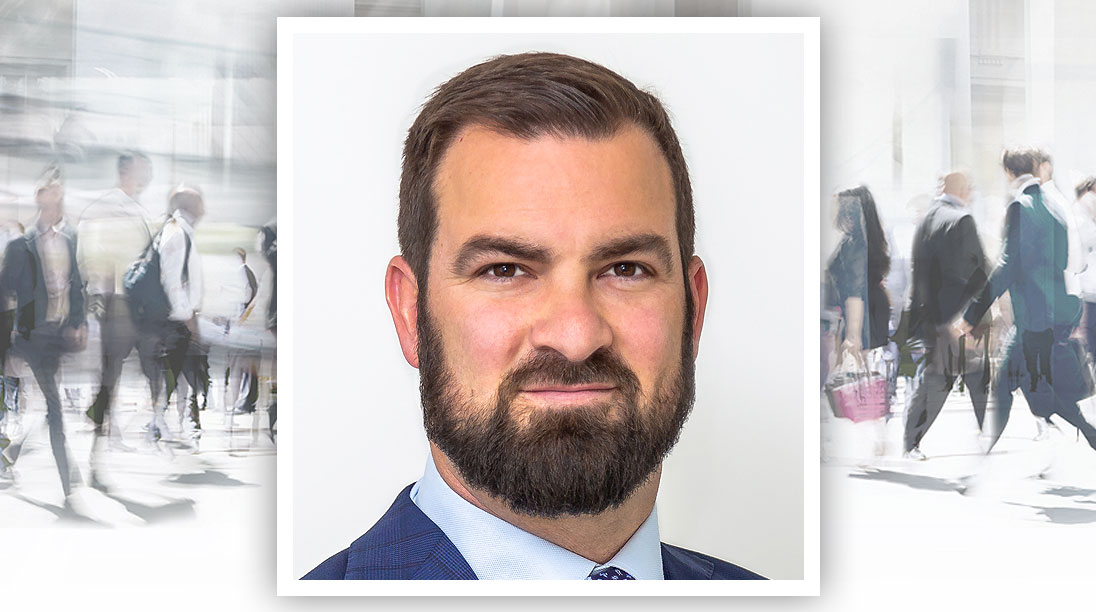
James Voortman
“As local new-car dealers are squeezed, it will ultimately be Australian customers who pay the price through less investment in local jobs and reduced access for regional communities,” he said.“It is therefore, absolutely vital that the government implements the commitments made prior to the election to extend unfair contract terms to all new car franchisees and to develop an unfair trading practices prohibition for franchisees.” Mr Voortman said that in the past five years, 28 brands have set up in Australia.
“However, an increase in the number of brands has not resulted in increased profits,” he said.
“If this trend continues, we certainly don’t want to end up in a situation where we’re seeing dealerships closed, and local jobs lost.”He said that Australian franchised new car dealers had seen “their fair share” of manufacturers come and go.
“However, new-car dealers are dedicated to their communities and have always been there to honour warranty obligations, Australian Consumer Law guarantees, and recall requirements for drivers,” he said. “In a rapidly changing industry, it is imperative that the automotive infrastructure and services that Australians rely upon are protected and maintained,” he said.
By Neil Dowling








 Read More: Related articles


