


Ford CEO Jim Farley has doubled down on recent remarks that there were “entrenched issues that needed to be solved” now saying that there is an “internal dysfunction” that is putting the company at a financial disadvantage.
Mr Farley, speaking to Automotive News (AN) in the US, said Alan Mulally (Ford’s CEO from 2006 to 2014) cleaned up a lot of the culture of internal dysfunction “but that it has since returned.”
“We can cut the cost and the people and do it quickly,” Mr Farley said. “But the reality is, if you don’t change the efficiency of engineering, supply chain and manufacturing — the way people work — it’ll grow back, because it did. It all grew back.
“My job as CEO is to make sure far after I’m gone that it doesn’t grow back.”
He has promised solutions to Ford’s quality problems but last week the company was hit by three new issues – a battery fire that caused weeks of production and shipment delays for the F-150 Lightning EV; a software problem that showed up in pre-production models of the Escape SUV being built in the Louisville plant; and a stop-sale on a number of models with the 10-speed auto transmission because of the possibility of a loose bolt.
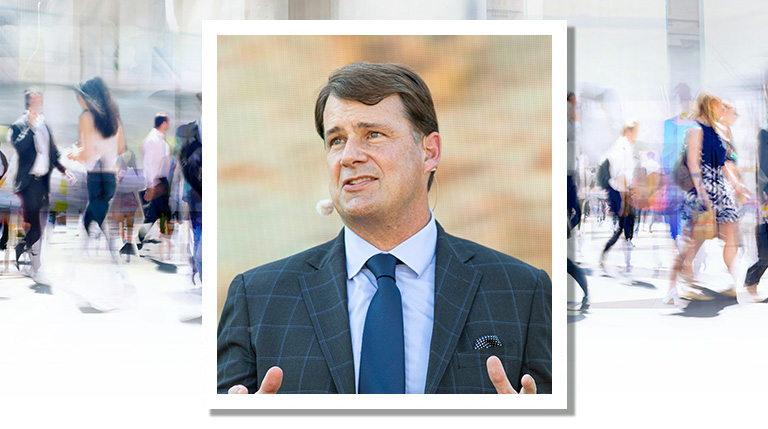
Jim Farley
The US transport authority, the National Highway Traffic Safety Administration (NHTSA), has reported that Ford has issued the most US recalls in the industry for the past two years.
Mr Farley said future plans are to redesign Ford’s manufacturing process so vehicles have less content that assembly workers have to install.
He said that includes reducing the number of fasteners in a vehicle by half and moving to larger castings with fewer parts, similar to Tesla.
Much of the current problem with the manufacturing processes at Ford became clear only after a group within Ford called Team Edison created the EV model, the Mustang Mach-E.
“Our prejudice will never get us to 8 per cent (EV profit) margins,” he said.
“We have to design the vehicle totally differently. We have to manufacture it, source it and sell it totally differently. That’s been a big transition.”
It is one year since Mr Farley split Ford into separate divisions to accelerate what he calls a “dual transformation” of its traditional internal-combustion business and its development of connected electric vehicles.
AN said that a year in, some parts of his plan are progressing faster than others.
“These huge transformations are not linear, perfectly predictable things,” Mr Farley said last week.
He said he’s pleased by the reception to Ford’s first wave of EVs and connected-vehicle software but frustrated by long-standing cost and quality issues weighing down its business.
Executive Chair Bill Ford said he’s seen these kinds of problems before.
“It’s been episodic for a lot of my career,” Mr Ford said at a press event held at Ford’s battery plant.
“We get it right, we slide back, we get it right. I think we probably had so much focus on the future that we perhaps took the eye off the ball a little bit on the present. But Jim’s (Farley) got a full-court press on it, and we’re already starting to see results.”
Mr Ford said he believes splitting the company was the right decision and that Mr Farley and his team need to continue moving quickly.
“Jim’s got a very hard job, probably the hardest job I’ve ever seen for a CEO,” Mr Ford said in an AN interview.
“But he’s also uniquely qualified to do it.”

By Neil Dowling








 Read More: Related articles


