
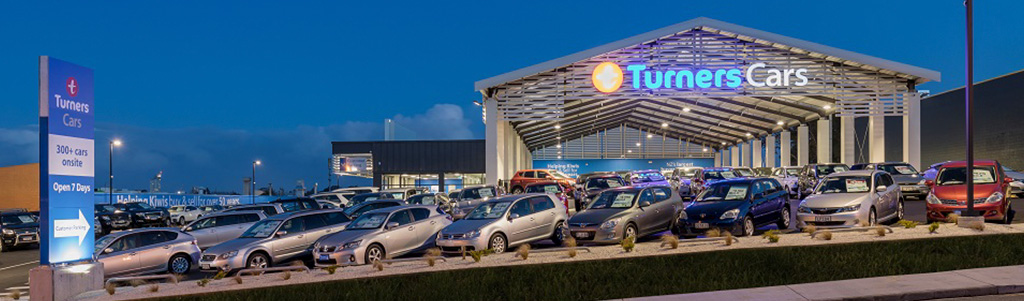


It expects first-half earnings for the current financial year to be “modestly ahead” of its $23.2 million net profit before tax record in the first half of last year.
It said the challenges included four months of “omicron impact”, rising interest rates, increased government regulation and decreased industry demand.
But it had seen an increase in car sales year-on-year and “as a result, strong growth in market share.”
“The wider NZ used car market is down 7.5 per cent to date (April to September) compared with the same period last year,” it said in a statement to the Australian Securities Exchange (ASX).
“Turners’ auto retail network’s expansion, highly effective (and award winning) advertising and retail optimisation strategy continues to drive growth for the business and offset the impact of the interest rate headwinds being experienced.”
Group CEO Todd Hunter said: “We are seeing clear evidence that NZ consumers are increasingly looking to buy and sell with trusted people and a business that will be around for years to come.”
“We also expect to see further transition from new to used vehicles in tougher economic times.”
Turners is the biggest reseller of used and end-of-life vehicles in New Zealand and last year embarked on transitioning to concentrate on electric and low-emission vehicles.
It said that it sees increasing hybrid and EV sales, particularly as more corporate and government fleets move from conventional vehicles, and has started putting EVs and hybrids into its Turners Subscription fleet. As of August this year, this fleet has more than 160 vehicles.
In its outlook that was announced at the annual general meeting in August, the company said that one of the most attractive aspects of the used-car market “is that it is a needs-based purchase and therefore more resilient and less affected by changing economic conditions.”
It said that 20 per cent of New Zealand vehicles – in excess of 830,000 cars – are more than 20 years old which meant they were “essentially at the end of their economic life and needing to be replaced in the near future.”
Turner’s Todd Hunter said the brands, network and diversified business position of the company meant it was “significantly de-risked”.
“The work we have done on local sourcing of vehicles, building quality into the finance book, adding distribution to insurance, means the business is positioned to withstand or potentially take advantage of some of these changing conditions,” he said.
“Despite the economic headwinds we are still confident of growth. The main growth engine will be out of auto retail with modest growth from finance, insurance and credit management.”
“Auto retail growth continues to come from retail optimisation and branch expansion and we have a 10 per cent market share goal in our sights.”
“Our expanding auto retail business has an obvious positive halo effect in insurance and finance. Headwinds in finance are offset by growth driven out of direct lending and improvements in distribution. Insurance growth will come from direct and digital distribution.”
The full first-half FY23 results are to be released on November 22.
By Neil Dowling







 Read More: Related articles


