


AS THE election made its way to a Labor victory, all sorts or promises were made to the auto industry, and in some cases unmade, leaving industry players wondering just what issues remain on the table for the government to address.
In the wake of the confirmation of three more years of Labor, the Australian Automotive Dealer Association (AADA) is pursuing its program of representation of key auto issues that rest in the hands of the federal government.
In this exclusive briefing with GoAutoNews Premium, the CEO of the AADA, James Voortman outlines the issues the association has on its plate and where they sit within the halls of power in Canberra.

L-R: James Voortman, CEO of the AADA, Paul Metrey, executive vice president, public policy, NADA (USA), Stephen Moir, group CEO, MTAWA, Peter Jones, CEO, VACC, John Kett, COO, GWM Australia & New Zealand
Mr Voortman will be moderating a feature panel presentation as part of the 2025 AADA Cox Automotive keynote session at the AADA Convention and Expo in Brisbane on July 22-23
The panel discussing key policy issues is made up of:
- Paul Metrey, executive vice president, public policy, NADA (USA)
- Stephen Moir, group CEO, MTAWA
- Peter Jones, CEO, VACC
- John Kett, COO, GWM Australia & New Zealand
Speaking to GoAutoNews Premium ahead of the convention, Mr Voortman said that having navigated its way through the election, the AADA is now preparing to re-engage with the new government.
“Just before the election, the Labor government made the commitment to introduce a couple of franchising protections, namely the development of an unfair trading practices prohibition and also extending unfair contract terms to all franchisees.
“So now that they have won, it’s pretty clear that they will move towards implementing that and AADA is in the process of engaging with the new small business minister, Anne Aly, and we want to ensure that they make good on their commitment and implement that as soon as possible.
“Obviously, something else that’s going to be interesting in franchising is the appeal of the Mercedes-Benz judgment that needs to be handed down which is something we’ll be looking out for, too.
“Addressing these franchising issues probably cannot come at a better time given that we’re in a very competitive market with the arrival of so many new brands, and that’s great, but we know in the past that when things are very competitive, often those competitive pressures really affect dealers. That’s what we’re concerned about. 
“So franchising remains really important in terms of our action at a policy level with the government but that will be complemented with our activities in terms of helping dealer councils and to educate our members on some of the new protections.
“The other thing that we’re very focused on is the new vehicle efficiency standard (NVES) which started in January but really officially starts on the first of July when the government will start asking manufacturers to calculate their emissions outputs. And then, from the end of the year, they will start issuing debits or credits.
“We are going to be in the thick of it, and the critical part is going to be the NVES in 2026 when the government has committed to reviewing the scheme.
“Importantly, Labor did say, before the election, that they would look at moving the point of compliance from the point of import to the point of sale. And we have actually started meetings with the government on that particular issue. We are developing some data to show them why it’s such an important issue for dealers in Australia. So work is underway and the next few months will be pretty crucial.”
Mr Voortman said that assessing compliance at the point of entry is “pretty dangerous” for dealers.
“If an OEM performs quite well, it gets credits which it can then sell to other manufacturers who might need those credits to comply.
“So it’s not beyond the realms of possibility that some manufacturers might just bring in a certain kind of vehicle for the purposes of getting credits and monetizing those credits by selling them and then not worrying what’s happening in the dealerships.
“So I think it is quite dangerous for dealers and we have made progress getting the government to see that, although we have got a bit more work to do in the next few months.”
Mr Voortman said the rise of China as an automotive power has significant implications for the existing brands and what that means for dealers?
“We have a lot of brands coming in with high volume aspirations; but we want to ensure that all new brands are playing by the same rules in terms of their obligations under franchising and in terms of the obligations under Australian Consumer Law.
“One of the things we are worried about is, if brands are coming here and, inevitably, the competition is such that some have to leave, will dealers and consumers be protected in the process of those brands leaving, especially as we don’t want to see something similar to what happened with Holden back in the day.
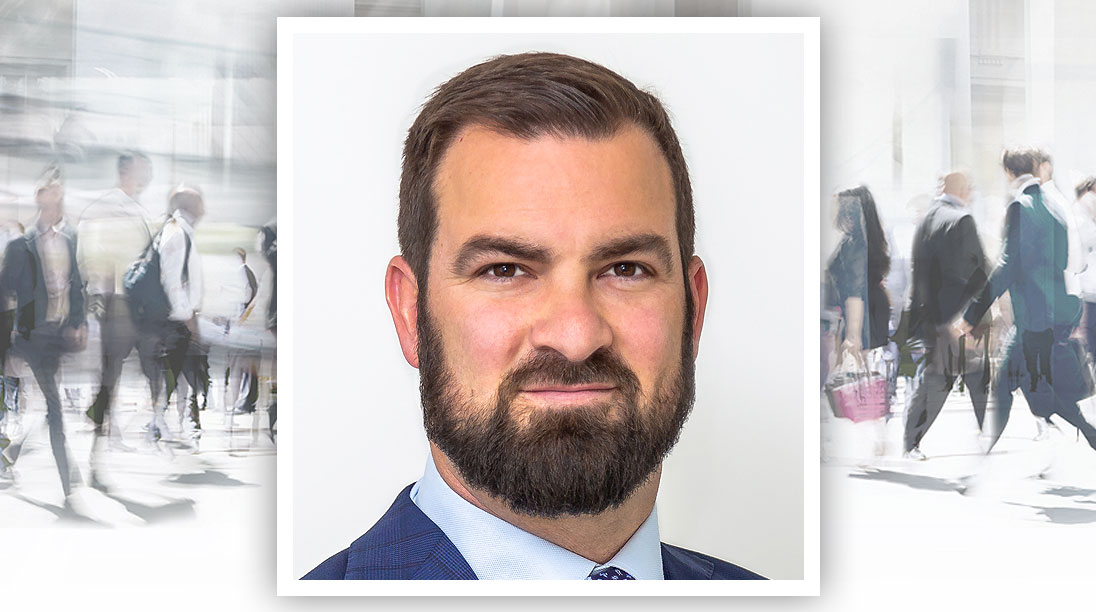
James Voortman
“So that’s very much on our agenda.
“But also when we talk about the rise of China, there’s no doubt that a lot of these brands are well-placed to meet the NVES requirements and there is no doubt they’ll be able to supply the cars, but there are a lot of assumptions that consumers will buy these vehicles and a lot of question marks around whether these vehicles will necessarily find a final buyer.”
Mr Voortman said discussions with OEMs about indexing cap-price servicing were also urgent.
“If you think about floor plan costs in recent years, if you think about insurance and rising wages, dealers are under significant pressures, and now those pressures are coming home to roost with declining profitability. So we really do have to look at ways to reduce costs, and I think one of those is revisiting cap-price servicing programs.
“This is going to come down to dealer councils having a really good negotiation with the manufacturer. But I think there are definitely some examples where inflation has risen way ahead of where capped-price servicing schemes have gone.
“And when you think about it, all you need to solve this is to insert into the contract with the buyer that the capped price is CPI adjusted.”
Mr Voortman said other topics to be discussed by the panel would revolve around the red tape and compliance that a lot of dealers have to undertake these days.
“A lot of reporting on things like payment time, gender, modern slavery and climate reporting have come from various governments over the past few years. A lot of it is unnecessary in terms of your reporting obligations and with much of it there’s no reason to report other than for information purposes. “Some of those we will touch on in our panel,” Mr Voortman said
“And then there is the ACL. We’re seeing more and more consumers are increasingly aware of their ACL rights, and that’s not a bad thing, but we’re also seeing some ridiculous examples of class actions.
“It’s time for us to ask whether the automotive industry needs its own set of laws or its own special framework to deal with some of these disputes, because what we’re seeing is a lot of brands looking at the consequences of a defect in their product, and that’s often a Class Action, which is heavily skewed in favor of some of those litigation funders and some of those law firms who have a strong interest in bringing those forward.
The one issue that came as a surprise a couple days after the election was some of the discussion around potentially there being a free trade agreement with Europe. Under that I think the absolute least we could hope for is the removal of the tariff on all European cars. 
“But the best we could hope for is the removal of the tariff, as well as, hopefully, the removal or the reform of the luxury car tax. So, that’s been a nice surprise post the election and that’s something we’re also working on with as much energy as we can muster and see that come to fruition,” Mr Voortman said.
The convention panel will unpack the top five policy issues impacting dealers in 2025:
- Automotive Franchising – Examining OEM power imbalances and the urgent call for fairer laws.
- New Vehicle Efficiency Standard (NVES) – Understanding cost pressures and navigating compliance.
- Australian Consumer Law – Addressing indemnification challenges and operational risks.
- The Rise of New Brands – Analysing the impact of Chinese entrants and market disruption.
- Red Tape & Compliance Overload – Managing operational burden and advocating for reform.
By John Mellor







 Read More: Related articles


